
How To Design Removable Pad Sports Bra With Different Support Levels
Quick Answer
You can build multiple support levels for removable pad sports bras within one shared base block by locking the front silhouette, neckline, armhole and underband geometry, while modularly adjusting four variable components: underband tension and width, pocket construction and pad thickness, strap structure, back closure and stabilising lining. A separate base block is only necessary if you switch activity category or change the core fabric architecture, as reusing the same master pattern avoids duplicated grading work, extra sampling rounds and split MOQ commitments.
Table of Contents
- Who This Article Is For
- Why Making Separate Bra Blocks For Each Support Level Is Usually the Wrong First Answer
- The Shared Base Block: What Should Stay Fixed
- Underband: The Module That Controls Base Support
- Pad Pocket & Removable Pad: The Buyer Under-Specified Module
- Straps, Back Panels and Closures: Fine-Tune Support Without New Pattern
- The Spec Matrix and the Sample Plan
- Decision Check
- Founder's Technical Insight
- FAQ
- Final Takeaway
Who This Article Is For
Primary reader: Growing women’s activewear brands already selling removable pad sports bras, receiving feedback that one style cannot meet low, medium and high support demand.
Secondary reader: Established brands planning seasonal extension for their core bra line, product developers creating a multi-support bra programme from reference images.
Project stage: Silhouette direction confirmed, base block not finalised, grading rules and specs still open for adjustment.
Problem being solved: Whether to create separate patterns for light / medium / high support removable pad bras, or engineer a modular system on one single base pattern.
Who may not need this article: Brands sourcing ready stock bras instead of developing private label custom styles, or brands that have locked in separate patterns for each support tier already.
What you gain from this article:
A component map for one shared bra block, clear rules to define support tiers via pads and supporting modules, key measurement points to lock before sampling, plus sample and bulk checks to confirm the modular design works consistently.
Why Making Separate Bra Blocks For Each Support Level Is Usually the Wrong First Answer
A multi-support sports bra line carries three layers of duplicated cost when built on separate base blocks: pattern development and grading, multiple sample cycles, and separate bulk minimum order quantities. Splitting one removable pad bra family into several blocks means maintaining multiple grade rule sets, separate fit approval workflows, and colour allocations spread across different styles. If your baseline MOQ is 200 units per style, multiple blocks will dilute your launch budget that was planned for one single bra silhouette.
The commercial risk goes beyond cost. Independent base blocks tend to drift subtly between development batches: neckline depth, armhole shape, strap attachment point and band curve can shift a few millimetres. This makes your range look disjointed on product listings or wholesale line sheets, even though you want customers to recognise them as one cohesive collection.
Leading activewear brands follow the opposite practice: they keep one shared silhouette for a removable pad bra family, and tune support level by swapping modular parts, rather than drafting new patterns. Community fit feedback also shows most support complaints are tied to band slippage, pad shifting, strap stretch and pocket stability, not the outer shape of the bra itself.
Separate base blocks are justified only in limited scenarios. If your support shift changes the target activity completely — for example, switching from daily low-impact wear to running high-impact support — the internal fabric structure usually needs a full redesign. The same applies when your price tier requires completely different base fabric, trims or sizing systems. Individual fit feedback alone is almost never a good reason to build a brand new block.
Before you cut new patterns, audit your existing base bra first. Removable pad support can be treated as a separate adjustable axis, independent of the outer silhouette. Most requests for stronger or gentler support can be solved within the same base shell.
The Shared Base Block: What Should Stay Fixed
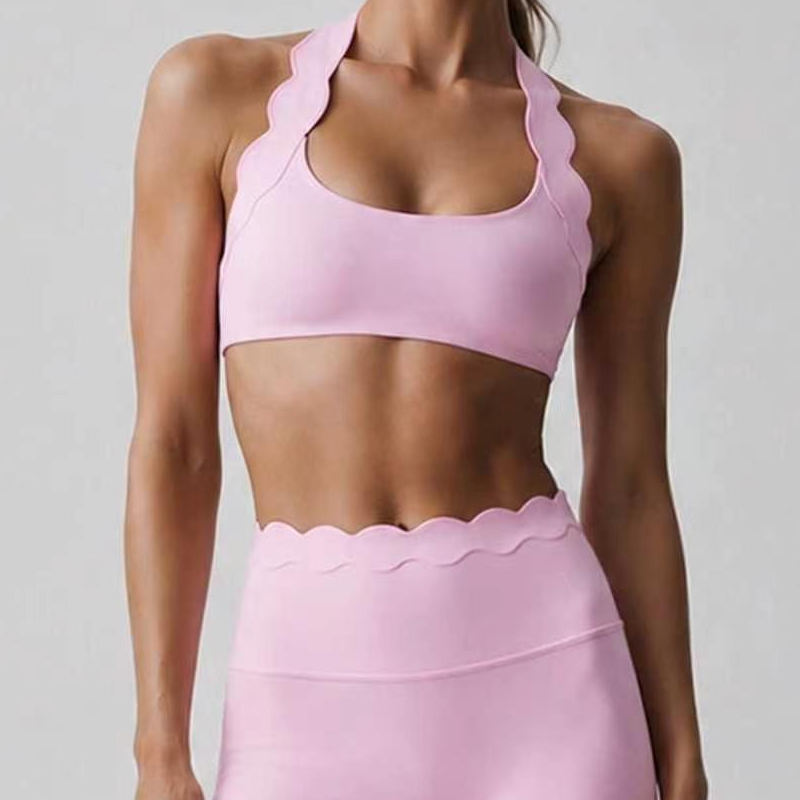
A shared base block contains all pattern geometry that remains identical across low, medium and high support variants. For this removable pad bra system, this includes the front shell panel shape, neckline curve, armhole outline, the attachment line for the underband, and all seam positions that define the outer silhouette. Once these lines are frozen and documented, you can swap support modules without reworking the whole pattern.
The biggest benefit of locking this base block is consistent fit testing. Fit revisions become meaningful only when one variable changes at a time. If neckline, band shape and pocket structure all change between two samples, your sample team cannot tell which adjustment fixed bounce control or caused back band lift.
Documentation carries equal weight to the paper pattern itself. A complete block record includes pattern cards with seam allowance, a measurement chart with tolerance ranges, grade rules for every fixed component, and notes confirming fabric grain direction for the shell. YOYOUNG keeps these records attached to each base block, so every change to pockets, pads or straps can be traced back to the original approved fit sample.
Elastic recovery and pad shift are dynamic over wear, so the underband, pocket lining and removable pads must be validated as one matched set. Fabric and trim selection should be reviewed together, not handled in isolated conversations.
Underband: The Module That Controls Base Support
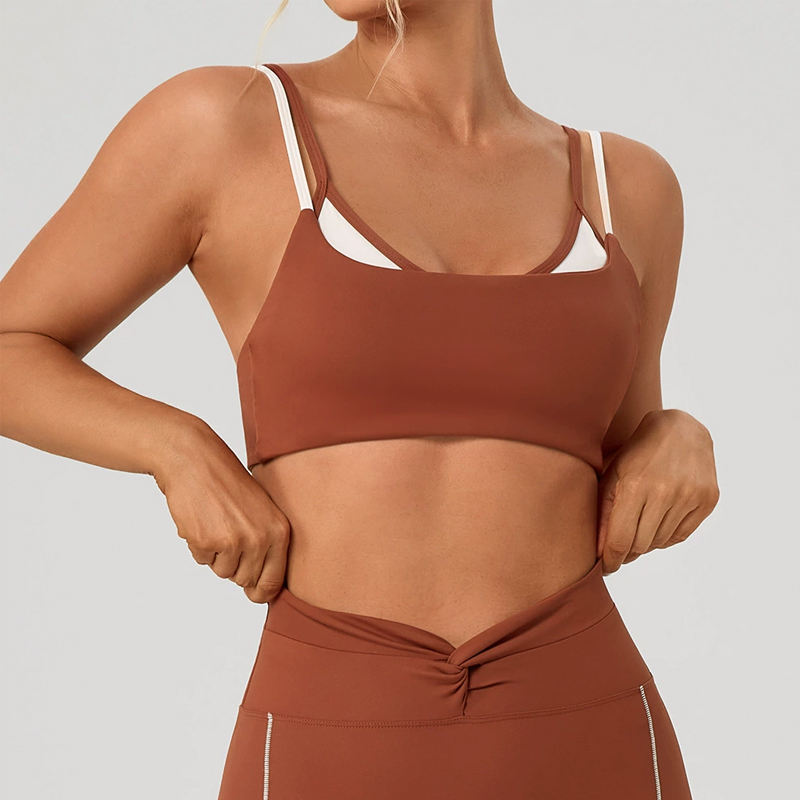
The underband carries the majority of support load for a removable pad bra. This is the first module you adjust to tier support levels, while keeping the outer shell unchanged.
For low support: Narrower underband, lighter elastic tension, softer recovery elastic. The band prioritises comfort for everyday wear, yoga and stretching, with gentle compression rather than heavy anchoring.
For medium support: Standard band width, balanced elastic tension, medium recovery elastic. It locks the bra in place during dance, hiking and light training without feeling restrictive.
For high support: Wider underband, higher tension power elastic, reinforced stitching at side seams. This anchors the bra firmly to reduce movement during high-impact activity.
Key specification risks to watch: Elastic relaxation after repeated washes. The same elastic will lose tension over time, and this rate will affect every support tier. All band variants must be washed and wear-tested on the same wash protocol before bulk approval, rather than only flat-measured on the table.
Your spec matrix must record band width, elastic width, elastic tension rating, stitch density and finished resting length for each support variant.
Pad Pocket & Removable Pad: The Buyer Under-Specified Module
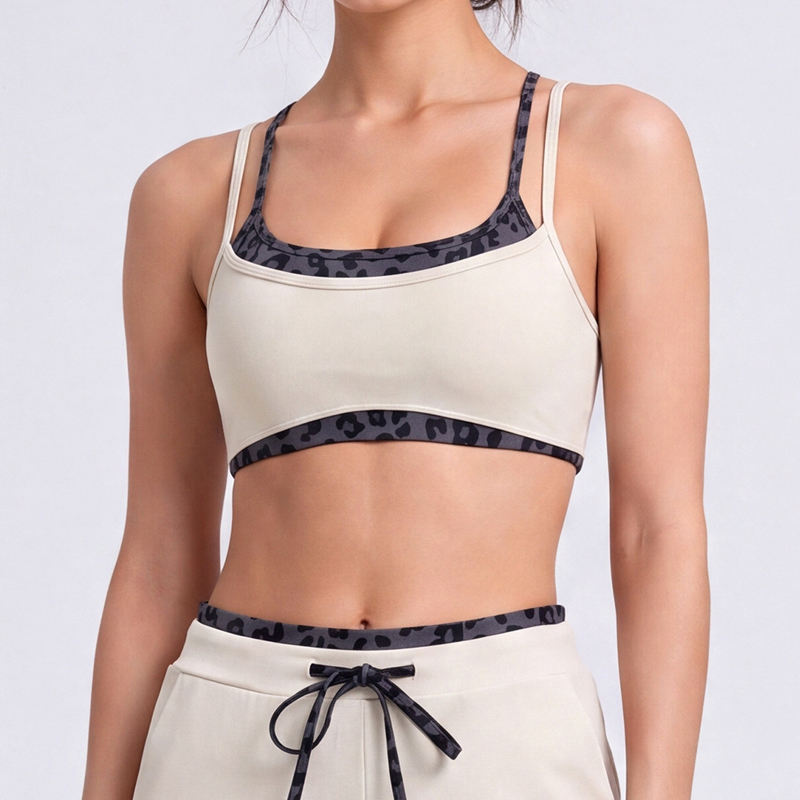
The removable pad pocket system is where this modular bra design succeeds or fails, and it is the section most often under-documented on tech packs. There are three common pocket and pad setups for this shared base block:
1. Fixed integrated pocket inside the shell, with interchangeable pads of different thickness and firmness
2. Double-layer lining pocket with reinforced top opening to stop pad sliding
3. Fully enclosed pocket with narrow slit opening, for thicker high-support pads
A thin soft pad delivers light shaping and low support. A medium density pad balances shaping and mild bounce control. A firm, contoured moulded pad provides the highest shaping and support within this shared shell.
The top failure point for removable pad bras is pad migration: twisting, folding or sliding out of alignment during wear. The pocket opening size, lining stretch and pad perimeter size must be calibrated together for each support grade. A pad that fits loosely in the pocket will shift; a pad that is over-sized will bulge and distort the outer shell silhouette.
Shrinkage matching is another critical check. The shell fabric, pocket lining fabric and pad foam rarely shrink at identical rates after the first wash. You must test shrinkage together before finalising pocket seam allowance. If lining shrinks differently, the pocket opening will warp and trap the pad incorrectly.
Approval checklist before bulk for this module:
✅ Pocket opening tested for pad insertion and lock-in
✅ Pad thickness and firmness clearly separated per support tier
✅ Shell and lining shrinkage verified on the same wash cycle
✅ Pad retention confirmed during movement wear test
✅ No distortion of the fixed outer silhouette after inserting thicker high-support pads
Straps, Back Panels and Closures: Fine-Tune Support Without New Pattern
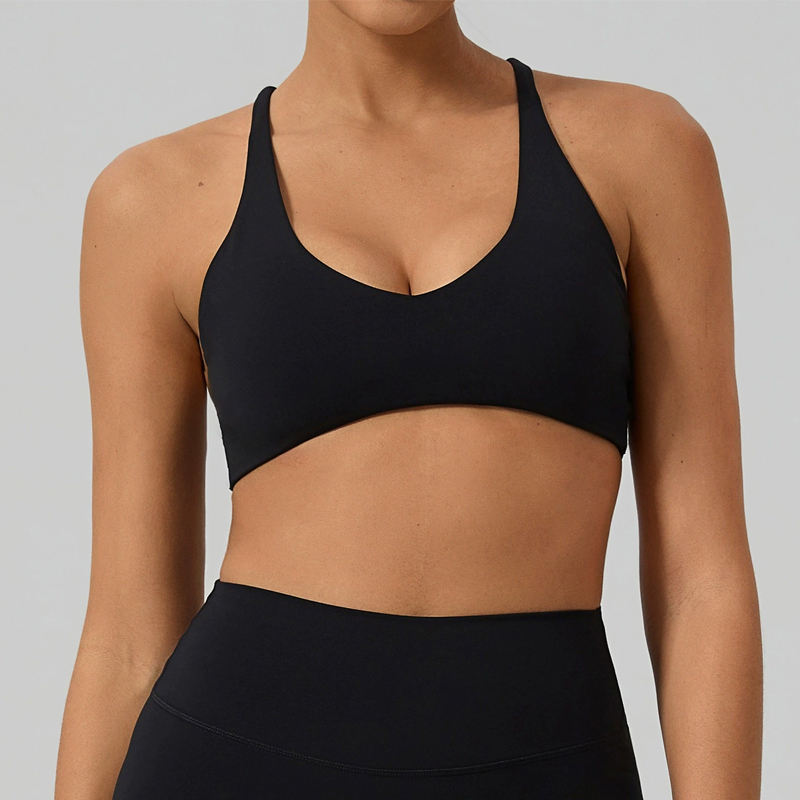
Strap width, strap elastic, back panel lining and closure style are your secondary tuning modules for support tiers. All attach to the fixed base block’s existing seam points, so no regrading of the outer shell is required.
Low support: Thin stretch straps, simple straight back panel, no hook closure, pull-on style. Strap elasticity is soft for all-day comfort.
Medium support: Medium width straps, optional single hook back closure, light stabilising lining on the back panel. The closure lets the wearer fine-tune band tightness.
High support: Wide reinforced straps, double hook closure, power mesh stabilising back lining. Wider straps distribute weight and reduce shoulder pressure during high impact.
Important rule: The strap anchor points on the base block stay fixed. Only strap width, strap elastic specification and back lining material change. If you move the strap anchor position, you break the shared base block rule and need a new pattern.
The Spec Matrix and the Sample Plan
Use a spec matrix to map every support tier to its module combination, while keeping the base shell unchanged:
| Support Tier | Underband Module | Pocket & Pad | |
| Low Support | Narrow, soft elastic | Thin flat pad, standard pocket | |
| Medium Support | Standard width, medium tension elastic | Medium contoured pad, reinforced pocket | |
| High Support | Wide, high-tension power elastic | Firm moulded pad, tight-fit pocket | |
Sampling rule for validation:
The minimum sample set for this multi-support block is three garments per tier: base size, the largest planned size, and the smallest planned size. Each sample tests one unique module combination from the matrix.
Testing only flat measurements is not enough; all samples need live wear testing to check pad shift, band slippage and bounce control.
Decision Check
Run through these checks before committing to your modular multi-support bra plan:
✅ Neckline, armhole and front shell geometry are locked and will not change between support tiers
✅ Underband tension and elastic specs are separated clearly for low / medium / high support
✅ Pocket opening and pad dimensions are calibrated to prevent pad migration
✅ Strap anchor points stay fixed; only strap width and elastic grade change
✅ Shrinkage and elastic recovery testing are scheduled for all lining, pad and band components
If any of these points cannot be satisfied, a separate pattern block may be required.
Founder's Technical Insight
Many brands assume different support means completely different bra shapes. In our development experience, most customers love one specific silhouette and just want more options inside that same look. The removable pad pocket becomes your simplest tool to tier support, but brands often rush pad specs without testing pocket retention. A beautiful bra will get poor reviews if the pad folds or slides halfway through a workout. Lock the shell first, then treat pads, band and straps as your adjustable tuning knobs. This keeps your collection clean, reduces development waste and makes colour planning far simpler.
FAQ
Q: Can one single bra pattern really deliver low, medium and high support with removable pads?
A: Yes, within reasonable limits, as long as neckline, armhole and outer shell lines stay fixed, and support changes only via the four modular parts: underband, pocket & pad, straps and back closure. The boundary is activity category: if you need elite running high-impact support that requires a completely different shell architecture, a separate block will be the better choice.
Q: When should I make separate patterns for different support levels?
A: Separate blocks are justified when your activity class changes fundamentally, or your price point needs completely different base fabric and trim packages. Fit complaints about pad shifting or insufficient bounce control can almost always be fixed inside the existing modular block, without starting a new pattern.
Q: How long does development take for this modular removable pad sports bra line?
A: If your shared base silhouette is already agreed, sample development usually takes 10–15 days. Pre-production confirmation and bulk fabric testing will add another 25–30 days, as every pad and band variant needs wash and recovery verification. This timeline is much faster than developing three independent bra patterns.
Q: What measurements matter most for grading this multi-support bra?
A: Band circumference, neckline width, armhole depth and strap length are core measurements. The critical discipline is grading the shell and pocket separately. You must test fit on real bodies across the size range, to make sure pocket opening scales correctly and the pad does not shift in plus or smaller sizes.
Q: Should I use fixed moulded pockets or open slit pockets for interchangeable support pads?
A: Open slit pockets are more flexible for swapping different pad thicknesses across support tiers, which fits this modular design perfectly. The trade-off is stricter specs for pad perimeter and pocket opening to stop migration. Fully moulded fixed pockets hold pads more securely but limit your ability to swap pad thickness easily. Many brands mix both: open slit pockets for low and medium support, enclosed moulded pockets for high support.
Q: What should I send you to start this modular bra development?
A: Share your target silhouette reference images, intended size range, support tier plan, fabric preference, and your rules for removable pads. Also tell us which modules you want to adjust, and confirm whether you want to keep one shared outer shell. This single set of information lets us build your spec matrix before sampling begins.
Final Takeaway
You do not need separate patterns for every support tier of your removable pad sports bra range. The modular approach keeps one consistent outer silhouette, while support strength is tuned by adjusting underband tension, pad density, strap specification and back stabilising features. Lock the shell geometry, build your spec matrix, test pad retention and elastic recovery, and validate extreme sizes before bulk.
This system cuts duplicated pattern work, reduces sampling cost and keeps your collection visually unified. A separate block remains the correct decision only when your support class, activity target or fabric price architecture genuinely requires a brand-new internal structure.
👉 Ready to plan your multi-support removable pad bra range? Send your size chart, target support tiers and tech pack over. YOYOUNG Sportswear will map all modular components on one shared base block before sampling starts. If you only have reference photos, we can build the component brief from your images.
About YOYOUNG Sportswear
Founded in 2016, manufacturing custom women’s activewear, yoga wear and sports bras in Jiangsu, China.
We provide OEM and ODM development support for sports bras, yoga leggings, tennis dresses, tops and matching sets.
Structured sample development with sample to bulk consistency control and approved sample references.
Quality control aligned with AQL 2.5 inspection standards, in-process and final checklists.
Current certification information can be reviewed during supplier evaluation based on the project and documentation requirements.
